Best Morocco Road Trip: Cities, Mountains and Desert
Few countries pack as much into one drive as Morocco. On a single Morocco road trip you can wander the souks of Marrakech, cross the High Atlas, follow a valley of mud-brick kasbahs, sleep in the Sahara and finish in the old medinas of Fes and Chefchaouen. The roads are good, the distances are manageable and every few hours the landscape changes completely.
We are a family from Merzouga, at the edge of the dunes, and we drive these roads every week. In this guide we share the best Morocco road trip route we know: a 10-day itinerary from Marrakech to Tangier through the mountains and the desert, a shorter 7-day version, real driving times and honest advice on driving yourself or travelling with a private driver.
Morocco road trip at a glance
- Best route: Marrakech – High Atlas – Ait Ben Haddou – Dades Valley – Todra Gorge – Merzouga – Fes – Chefchaouen – Tangier
- Ideal length: 10 days (7 days for a shorter version)
- Total distance: about 1,500 km
- Longest day: Merzouga to Fes, about 470 km and 7–8 hours with stops
- Best time: March to May and September to November
- Highlights: Tizi n’Tichka pass, Ait Ben Haddou, the Dades and Todra gorges, a night in the Sahara, the Fes medina and the blue streets of Chefchaouen
The best Morocco road trip route
The classic Morocco road trip route is one way, not a loop. You start in Marrakech, drive south-east over the Atlas to the Sahara, then turn north through the Middle Atlas to Fes and finish in Tangier, where you can fly home or take the ferry to Spain. Driving one way means you never repeat a road, and with open-jaw flights it costs no more than a round trip.
It is also the best Marrakech to Fes road trip: instead of the direct motorway, you take the long way round through the mountains and the desert, which is where most of Morocco’s beauty is.
10-day Morocco road trip itinerary
This Morocco road trip itinerary gives you two nights in Marrakech and Fes, a full day in the Sahara and a day in Chefchaouen. It is the same route as our private 10-day tour from Marrakech to Tangier.
Day 1: Marrakech
Arrive in Marrakech and spend the day in the medina: the Bahia Palace, the souks and Jemaa el-Fna square at sunset. See our list of things to do in Marrakech.
Day 2: Marrakech – Tizi n’Tichka – Ait Ben Haddou – Dades Valley
The real road trip starts here. The road climbs into the High Atlas to the Tizi n’Tichka pass at 2,260 metres, the highest main road pass in Morocco, with Berber villages and viewpoints all the way up. On the other side you visit the kasbah of Ait Ben Haddou, a UNESCO World Heritage site, drive through Ouarzazate and follow the Road of a Thousand Kasbahs to the Dades Valley. About 7–8 hours with stops: this is the best Atlas Mountains road trip day in the country.
Day 3: Dades Valley – Todra Gorge – Merzouga
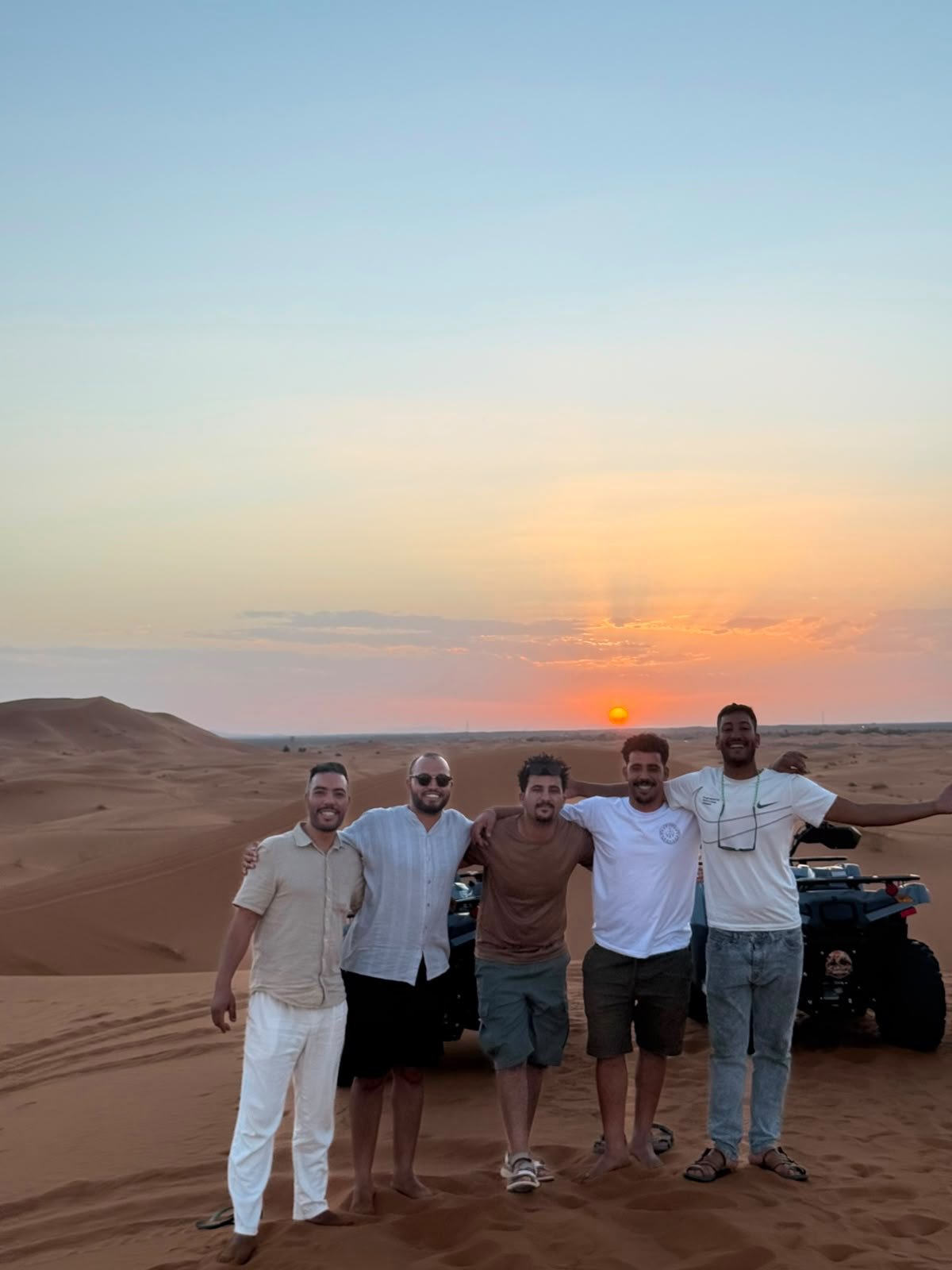
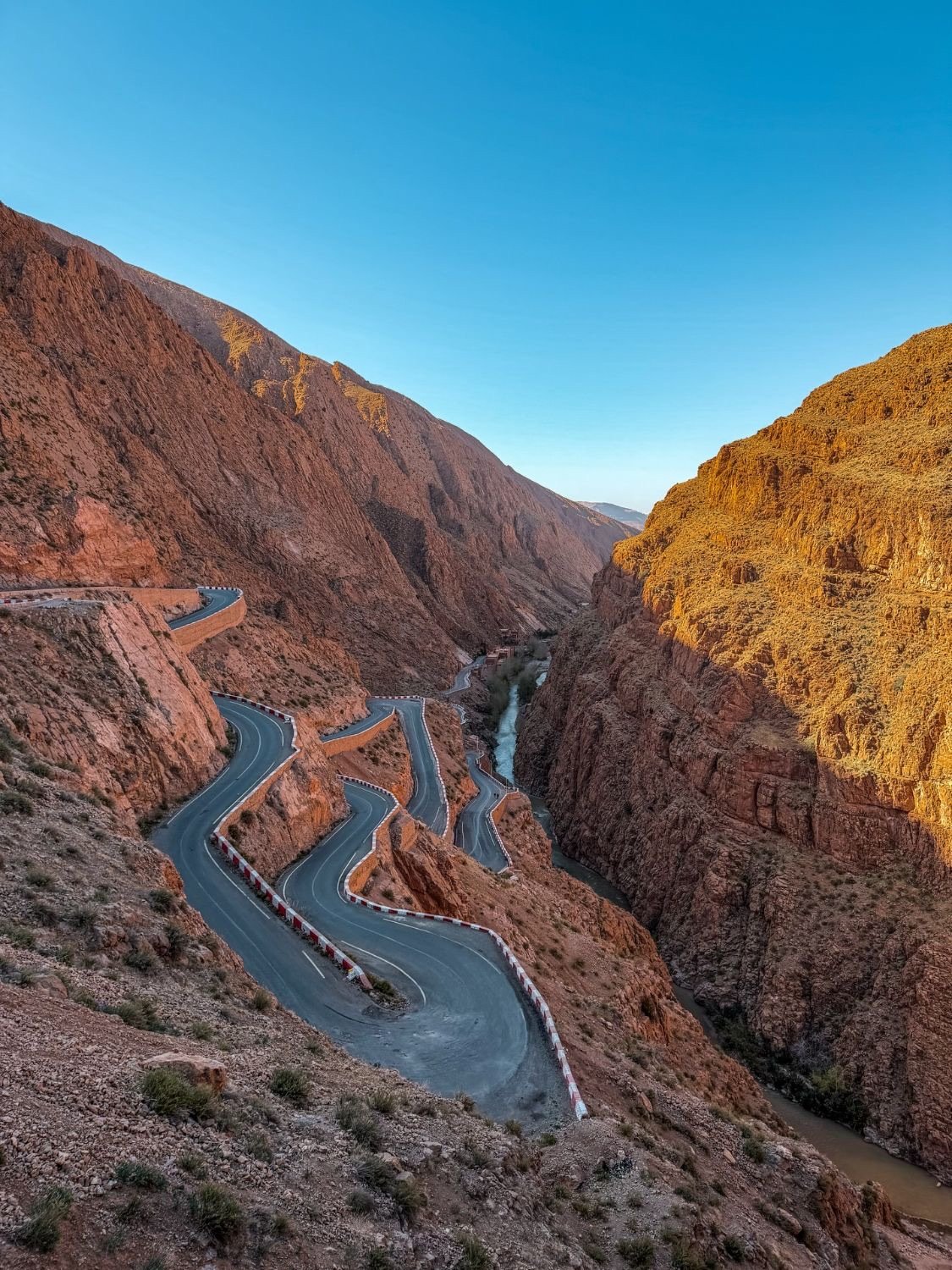
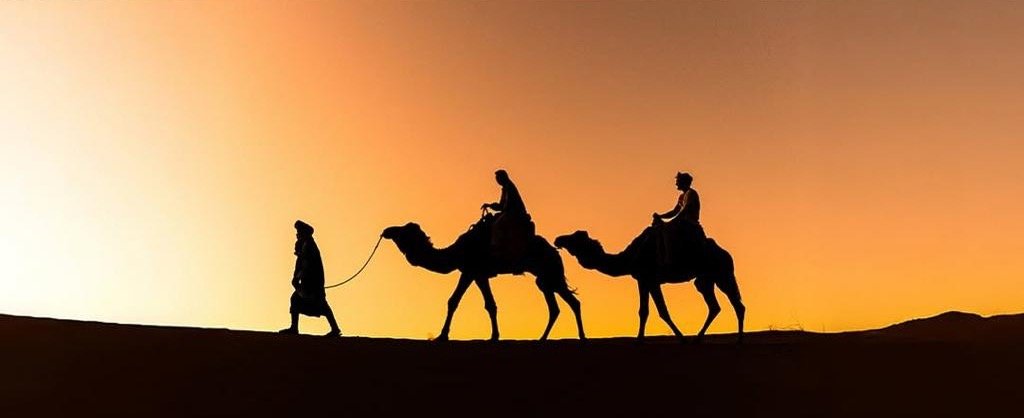
Before you leave the valley, drive a little way up the Dades Gorges to the famous hairpin bends below. Then walk between the 300-metre walls of the Todra Gorge, then continue through Tinghir, Erfoud and the desert plains to Merzouga. In the late afternoon you leave the car and ride a camel into the Erg Chebbi dunes for sunset and a night in a desert camp. Read more about the night in the Sahara.
Day 4: A full day in the Sahara
This is the heart of any Morocco desert road trip. Watch the sunrise from the dunes, then explore around Erg Chebbi by 4×4: a nomad family, the Gnawa musicians of Khamlia and the Rissani market. Not sure whether you need this extra day? Read one or two nights in Merzouga.
Day 5: Merzouga – Ziz Valley – Midelt – Ifrane – Fes
The longest drive of the trip, about 470 km. You follow the palm groves of the Ziz Valley, cross the Middle Atlas past Midelt, stop for the Barbary macaques in the cedar forest near Azrou and pass the alpine town of Ifrane before reaching Fes. Our Fes to Merzouga guide covers this road in detail.
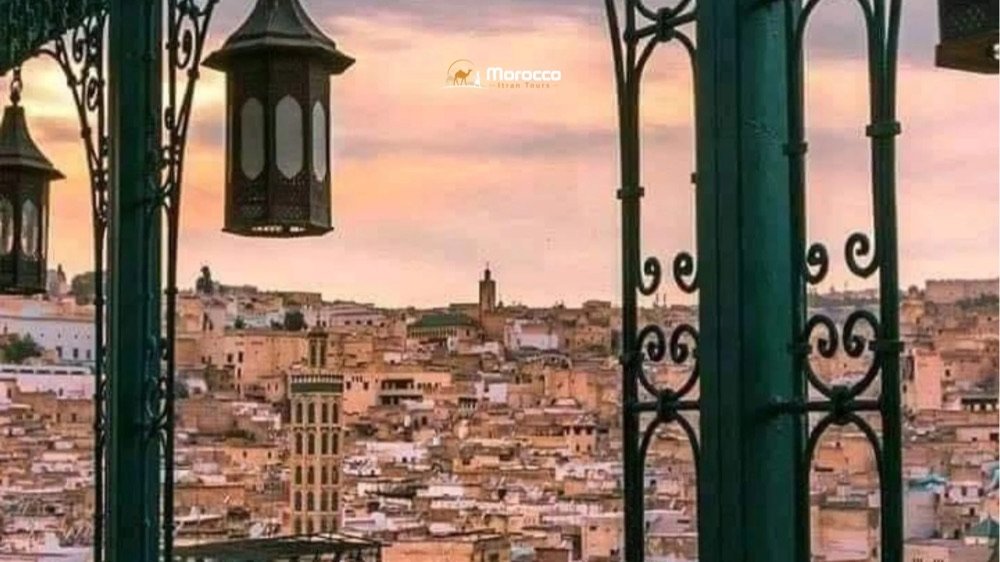
Day 6: Fes
Spend the day in Fes el-Bali, the largest car-free medina in the world, with a local guide: the tanneries, the madrasas and the craft workshops. Leave the car at your riad, you will not need it.
Day 7: Fes – Volubilis – Meknes – Chefchaouen
Drive north-west to the Roman ruins of Volubilis and the imperial city of Meknes, then into the Rif Mountains to Chefchaouen, the blue city.
Day 8: Chefchaouen
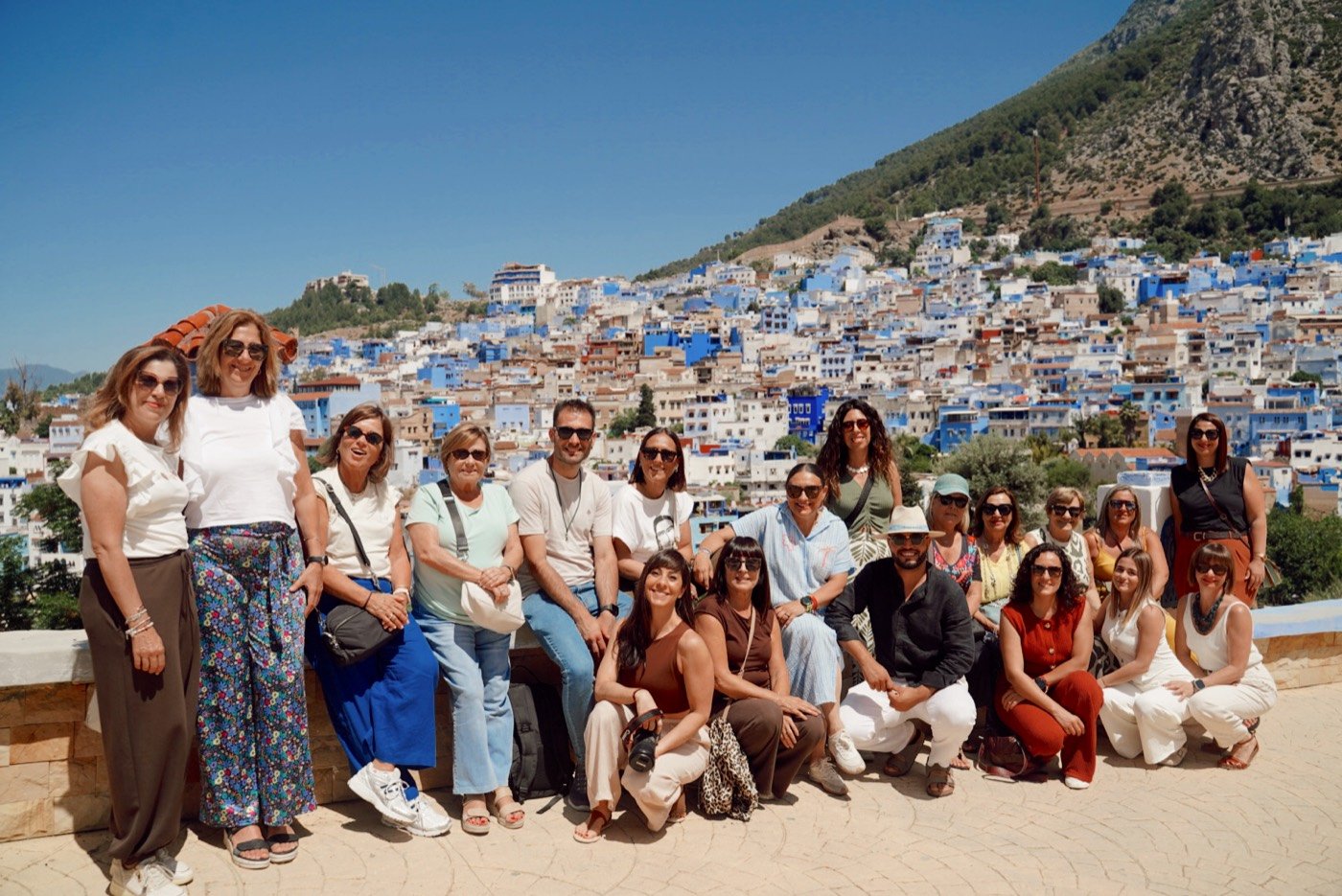
A slow day in the blue streets, the Ras El Maa spring and the viewpoint at the Spanish Mosque at sunset. Our Chefchaouen travel guide has the details.
Days 9–10: Chefchaouen – Tangier
A short drive of about 2–2.5 hours takes you to Tangier, through Tetouan or the coast at Asilah. Visit the kasbah, Cape Spartel and the Caves of Hercules before you fly home or take the ferry to Spain.
7-day Morocco road trip
With a week, a Morocco road trip in 7 days still covers mountains, desert and an imperial city. Follow days 1–6 above and fly home from Fes on day 7. If you prefer to finish where you started, a loop from Marrakech to Merzouga and back works too, as in our 7-day Morocco itinerary.
Only have 4 or 5 days? The core of the trip, a Morocco road trip from Marrakech to Fes through the desert, fits in 4 days: see our 4-day tour from Marrakech to Fes.
Driving times on the route
- Marrakech → Tizi n’Tichka pass: about 2 hours
- Tizi n’Tichka → Ait Ben Haddou: about 1.5 hours
- Ouarzazate → Dades Valley: about 2 hours
- Dades Valley → Todra Gorge: about 1.5 hours
- Todra Gorge → Merzouga: about 3.5 hours
- Merzouga → Fes: about 470 km, 7–8 hours with stops
- Fes → Chefchaouen: about 200 km, 3.5–4 hours
- Chefchaouen → Tangier: about 2–2.5 hours
These are real times with short stops. Mountain roads are slower than the map suggests, so plan no more than one long drive in a row. For the first half of the route, see Marrakech to Merzouga: distance, driving time and best stops.
Driving in Morocco: what to know
Driving in Morocco is easier than many people expect. The main roads on this route are paved and in good condition, signs are in Arabic and French, and you drive on the right. A few things are worth knowing before you go:
- Speed limits are usually 120 km/h on motorways, 100 km/h on main roads and 60 km/h or less in towns. Police checks with speed cameras are frequent, so keep to the limits.
- Carry your papers: your driving licence, passport and the rental documents. Ask your rental company whether you also need an International Driving Permit.
- Avoid driving at night, especially in the mountains: roads are unlit and you will meet animals, bikes and people walking.
- Fill up often in the south, where petrol stations can be far apart.
- Expect slow sections behind trucks on the Tizi n’Tichka pass and through villages.
- The dunes are not for cars: the road to Merzouga is paved, but you reach the camp by camel or with a local 4×4.
Is it safe to drive in Morocco?
Yes, for a careful driver it is. The main risks are other drivers overtaking on blind bends, unlit roads at night and tiredness on the long days. Drive in daylight, take breaks and do not try to cover Marrakech to Merzouga in one day.
Renting a car or a private driver?
Renting a car in Morocco gives you freedom and works well if you enjoy driving. But on this route many of the best moments happen away from the car: the camel ride, the camp, the 4×4 day around the dunes and the guided visits in Fes. You also spend long hours concentrating on mountain roads instead of looking at them.
A Morocco road trip with a private driver is the same trip without the stress. Your driver-guide knows every viewpoint, books the riads and the desert camp, translates, and lets you stop wherever you like. That is how we run all our private Morocco tours: same route, same freedom, but you look out of the window. Read more in private or group tours in Morocco.
Best time for a road trip in Morocco
Spring (March to May) and autumn (September to November) are the best seasons for a road trip in Morocco: warm days, cool nights and clear mountain views. Summer is very hot in the desert, and in winter the Tizi n’Tichka pass can have snow and close for a few hours after a storm, while desert nights are cold. See the best time to visit Morocco.
Frequently asked questions
How many days do you need for a Morocco road trip?
Ten days is ideal for the full route from Marrakech to Tangier with the Sahara. Seven days covers Marrakech, the desert and Fes, and four days is the minimum for Marrakech to Fes through Merzouga. Read how many days you need in Morocco.
What is the best Morocco road trip route?
Marrakech – High Atlas – Ait Ben Haddou – Dades Valley – Todra Gorge – Merzouga – Fes – Chefchaouen – Tangier. It crosses every landscape in the country without driving the same road twice.
Can I drive to the Sahara in a rental car?
Yes. The road to Merzouga is paved all the way, and any normal car can make it. You leave the car at your hotel or at the edge of the dunes and continue by camel or with a local 4×4.
Can I do the road trip from Tangier to Marrakech instead?
Yes, the route works just as well in reverse, which suits travellers arriving by ferry from Spain. See our 10-day itinerary from Tangier.
Is a self-drive road trip cheaper than a private tour?
Often a little, especially for two people. But once you add fuel, tolls, parking, a 4×4 in the desert and local guides, the difference gets smaller, and for families or groups a private tour is often the better value. Ask us for a quote for your dates.
Conclusion
The best Morocco road trip takes you from the red city of Marrakech over the Atlas, through the kasbah valleys to the dunes of the Sahara, and on to Fes and the blue streets of Chefchaouen. Drive it yourself, or let us drive it with you: either way, give it at least a week and leave time to stop. If you would like us to plan your route, get in touch and we will send you a personalized itinerary.